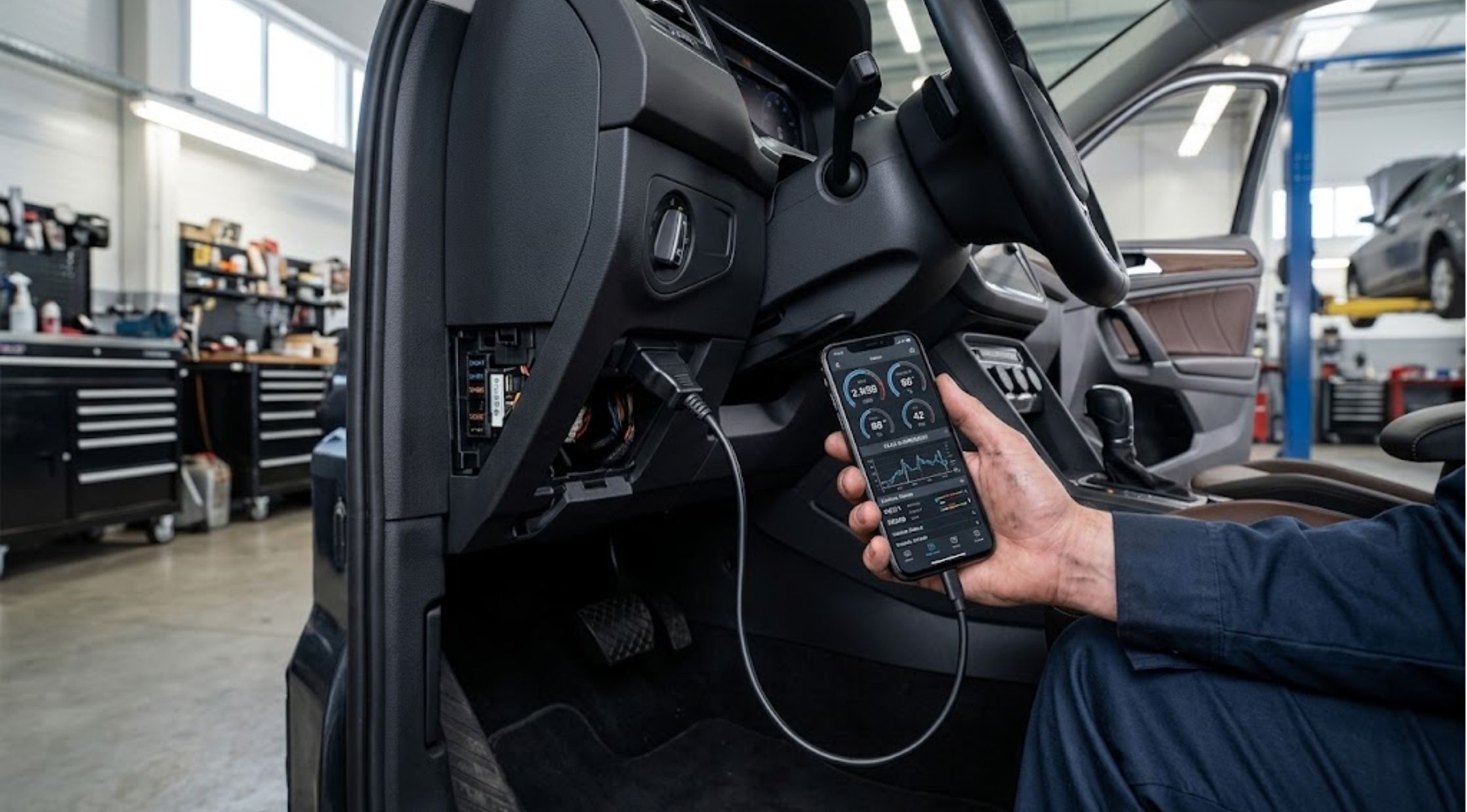
A warning light appears on your dashboard, and suddenly you’re left wondering: Is it something minor, or could it turn into an expensive repair?
Taking the car straight to a repair shop is one option, but it isn’t always necessary just to understand what’s happening. The bigger problem is knowing which diagnostic equipment can actually provide useful information instead of simply displaying a mysterious error code.
Choosing the right Car Diagnostic Scanner can make vehicle troubleshooting much easier. But with everything from basic code readers to professional-grade scanners available, it can be difficult to know what features are worth paying for.
The key is to match the scanner to the type of diagnosis you actually need.
Why Buying the Right Diagnostic Tool Can Be Difficult
Not all Automotive Diagnostic Tools perform the same job.
A basic scanner might read and clear engine fault codes, which can be useful for checking a check-engine light. However, modern vehicles contain numerous electronic control modules covering systems such as the transmission, ABS, airbags, body electronics, and more.
That means a scanner capable of accessing only the engine computer may leave you without important information.
There’s another issue: advanced features can vary considerably between products. Some tools provide live data, while others offer active or bidirectional tests. Some support coding and service functions, while others require separate equipment for those tasks.
The challenge isn't simply finding a scanner that works. It's finding one that won't become limiting when your diagnostic needs become more complicated.
Understand What You Actually Need
Before buying a Car Diagnostic Scanner, think about the jobs you expect it to perform.
Basic Code Reading
If you primarily want to identify why a check engine light has appeared, a simple OBD2 reader may be sufficient. These devices can provide fault codes that give you a starting point for further investigation.
However, a diagnostic code is not necessarily the same thing as a confirmed failed component. It should be treated as a clue rather than an automatic instruction to replace a part.
Full-System Diagnostics
For people who work on their own vehicles regularly or operate a small workshop, accessing multiple vehicle systems can be much more useful.
A full-system scanner can potentially communicate with modules beyond the engine, depending on the vehicle and scanner. This can help when the problem involves ABS, transmission, airbag, body, or other electronic systems.
Active and Bidirectional Testing
This is another feature worth understanding.
A bidirectional scanner can send commands to supported vehicle systems rather than simply reading information. Depending on the vehicle and available functions, this can allow technicians to test components or systems during diagnosis.
For more involved repair work, this can reduce the need to rely on guesswork.
Common Mistakes Buyers Make
One of the easiest mistakes is buying based entirely on price.
The cheapest scanner isn't necessarily the most economical choice if it lacks the functions you need. On the other hand, paying for a professional tool packed with features you will never use may not make sense either.
Another common mistake is ignoring vehicle compatibility.
Even when two scanners advertise broad coverage, their available functions can differ depending on the vehicle's make, model, year, and equipment. Checking compatibility before purchasing is therefore essential.
You should also pay attention to software costs. Some diagnostic platforms use subscriptions or charge additional fees for particular brands or functions. Understanding the ongoing cost before buying can prevent unpleasant surprises later.
Features Worth Looking For
When comparing Automotive Diagnostic Tools, consider these features:
- Full-system access: Useful when diagnosing more than engine-related faults.
- Live data: Helps you monitor vehicle parameters while troubleshooting.
- Bidirectional controls: Useful for supported active tests.
- Service functions: Look for functions relevant to the vehicles you work on.
- Coding capabilities: Important for certain replacement and configuration tasks.
- Wide vehicle coverage: Particularly valuable for households or workshops working on multiple brands.
- Regular updates: Helpful for keeping compatibility current.
- Clear diagnostic information: Easier-to-understand explanations can make troubleshooting less intimidating.
The exact availability of these functions depends on the scanner and the vehicle, so always verify compatibility rather than assuming every advertised feature works on every car.
When a Premium Car Diagnostic Scanner Makes Sense
If you only need to check an occasional check engine light, a basic reader may be enough.
But if you frequently maintain vehicles, work on multiple brands, or want deeper diagnostic capabilities, upgrading to a more comprehensive Car Diagnostic Scanner can be a practical investment.
YOUCANIC's UCAN-II-D PRO is one example of this type of equipment. The current model is positioned as a full-system OBD2 scanner with bidirectional controls, coding, service functions, TPMS programming, and built-in AI diagnostic assistance. YOUCANIC also states that the scanner supports more than 140 makes and offers free lifetime updates. Actual functions depend on vehicle compatibility.
The built-in AI feature is designed to explain trouble codes, suggest likely causes, and indicate what to check next. That can be particularly useful when a code doesn't immediately tell you which component is actually responsible for the problem.
The Benefits of Upgrading Your Diagnostic Setup
The biggest advantage of better Automotive Diagnostic Tools isn't simply having more buttons or features. It's having more information available when you need to make a repair decision.
A capable scanner can help you:
Reduce Guesswork
Instead of immediately replacing parts based on a warning light, you can gather additional diagnostic information first.
Work Across More Vehicles
Broader coverage can be useful if you own multiple vehicles or work on cars from different manufacturers.
Handle More Advanced Repairs
Features such as bidirectional controls, coding, and service functions can expand what you can diagnose and perform from one device.
Make Learning Easier
Modern scanners with clear explanations and repair resources can make diagnostic information more accessible to DIY vehicle owners.
YOUCANIC takes this broader approach beyond the scanner itself. The company also provides repair guides and instructional videos, while its current platform describes the UCAN-II-D as a full-system diagnostic tool with more than 40 service and reset functions.
A Simple Buying Checklist
Before purchasing, ask yourself:
What vehicles will I diagnose?
Check make, model, year, and supported functions.
Do I only need engine codes?
If yes, a basic scanner may be sufficient.
Will I need ABS, transmission, airbag, or body diagnostics?
If so, consider full-system access.
Do I perform repairs myself?
Bidirectional controls, coding, and service functions may be more valuable.
Are there subscription fees?
Calculate the long-term ownership cost, not just the purchase price.
Will I need the tool for future vehicles?
Broader coverage may provide greater flexibility.
Conclusion
The right diagnostic scanner isn't necessarily the one with the longest feature list. It's the one that gives you the information and functions you genuinely need for the vehicles and repairs you handle.
Start by identifying your typical diagnostic problems, check compatibility carefully, and compare features such as full-system access, live data, bidirectional testing, coding, and service functions.
For drivers and technicians who want to move beyond basic code reading, a more capable solution such as the YOUCANIC UCAN-II-D PRO can provide a broader diagnostic toolkit in one device.
With the right Car Diagnostic Scanner and the appropriate Automotive Diagnostic Tools, troubleshooting becomes less about guessing and more about gathering useful information before deciding what to repair.