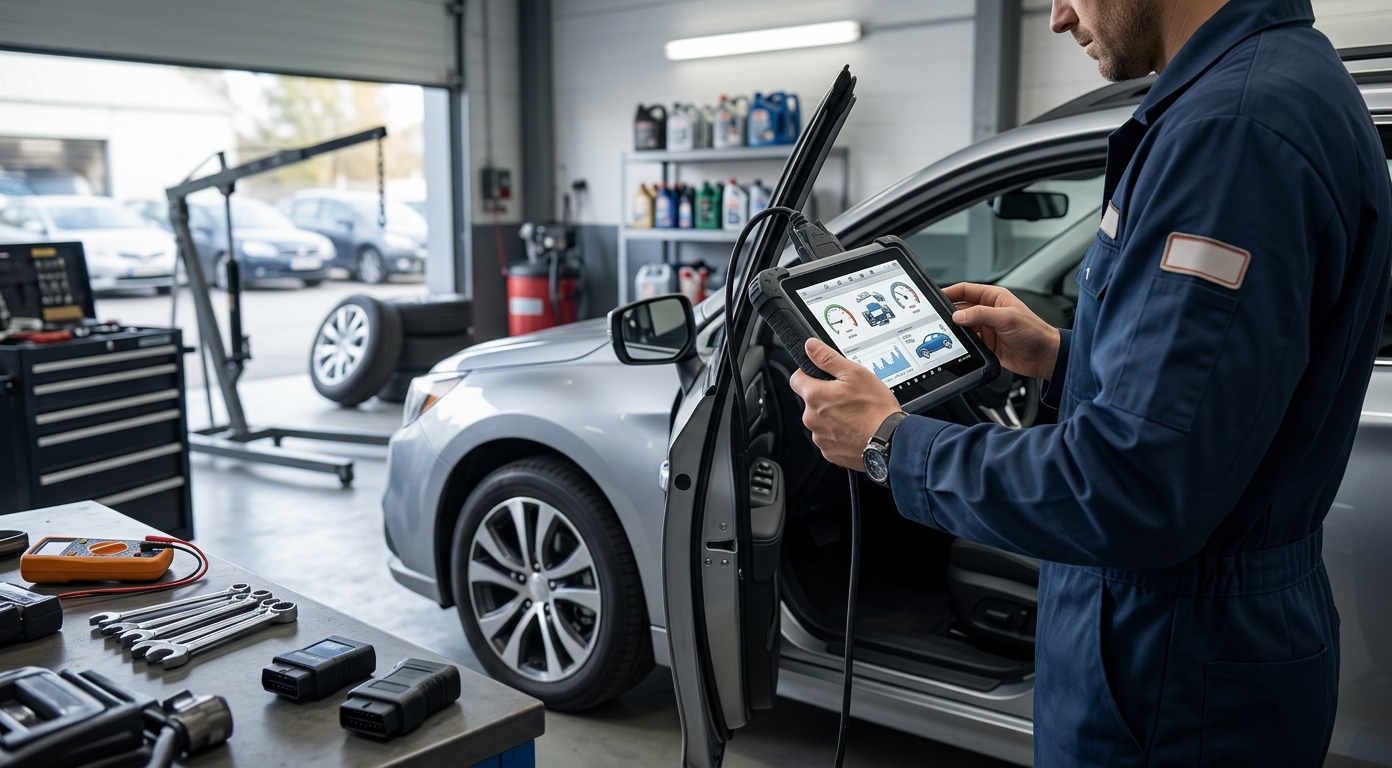
Has your check engine light suddenly appeared, leaving you worried about expensive repairs? Vehicle problems can create stress, especially when you cannot identify their causes. Moreover, visiting a mechanic for every warning light can increase maintenance expenses. Fortunately, the right Automotive Diagnostic Tools can help you investigate common vehicle issues before choosing your next steps. For drivers who want reliable guidance, Youcanic offers automotive repair information and diagnostic resources. By combining compatible diagnostic equipment with practical repair guidance, you can approach vehicle maintenance more confidently.
Common Car Problems That Make Diagnostics Difficult
Modern vehicles use electronic systems to monitor engine performance, emissions, transmission operation, and other functions. When a problem occurs, the vehicle may display a warning light or store a diagnostic trouble code. However, identifying the underlying cause often requires additional investigation.
Common challenges include:
- Check engine warnings: Drivers may struggle to determine whether a warning indicates a minor issue or a serious fault.
- Unexpected repair costs: Replacing parts without confirming the problem can waste money.
- Confusing diagnostic codes: Error codes often identify a system or condition rather than a specific failed component.
- Limited mechanical experience: Beginners may find it difficult to interpret vehicle data accurately.
- Incompatible equipment: Some scanners support only specific vehicles, systems, or diagnostic functions.
Consequently, drivers and DIY mechanics increasingly consider Automotive Diagnostic Tools for routine troubleshooting.
Why Do Vehicle Problems Become Difficult to Diagnose?
Understanding vehicle diagnostics helps you select equipment that matches your needs. Additionally, learning the basics can help you avoid unnecessary repairs.
1. Modern Cars Have Complex Systems
Today's vehicles rely on electronic control modules, sensors, and computer networks. Therefore, a single warning light can indicate several possible problems. Accurate diagnosis helps you investigate these possibilities before replacing components.
2. Warning Codes Do Not Tell the Whole Story
An OBD2 scanner might display a code associated with an oxygen sensor or engine misfire. However, that code does not automatically confirm a component failure. For example, wiring problems, exhaust leaks, or other faults can trigger oxygen sensor-related codes. Therefore, you may need additional tests before replacing any parts.
3. Basic Tools Have Limited Capabilities
Some entry-level scanners read and clear engine codes but cannot access advanced vehicle systems. Depending on your car, you may need more capable equipment to investigate ABS, airbag, transmission, or other faults. Therefore, selecting suitable Car Repair Tools can streamline troubleshooting and reduce unnecessary guesswork.
Practical Ways to Diagnose Car Problems More Effectively
You do not need professional mechanic skills to improve your understanding of vehicle maintenance. Instead, start with a structured approach and select the appropriate equipment for each task.
Follow These Diagnostic Steps
- Check the warning light: Determine whether it stays illuminated, flashes, or appears alongside other warnings.
- Observe vehicle symptoms: Record unusual noises, vibrations, starting difficulties, or performance changes.
- Read diagnostic codes: Use compatible OBD2 Scanners to retrieve stored trouble codes.
- Research the results: Consult reliable repair information and vehicle-specific diagnostic procedures.
- Inspect before replacing parts: When safe, check relevant connectors, wiring, hoses, and accessible components.
- Confirm the repair: Follow the appropriate verification procedure to determine whether the problem returns.
However, never rely on a scanner alone when your vehicle presents serious safety concerns. If the check engine light flashes, the engine overheats, or braking and steering problems develop, stop driving when necessary. Then, seek professional assistance.
How Automotive Diagnostic Tools Help You Make Better Decisions
Automotive Diagnostic Tools provide information that helps you determine your next steps. Depending on the model, these devices may read trouble codes, display live sensor data, monitor emissions readiness, or perform additional diagnostic functions.
What to Look for in OBD2 Scanners
Before purchasing a scanner, evaluate these essential features:
- Vehicle compatibility: Confirm support for your car's make, model, year, and diagnostic protocol.
- Diagnostic coverage: Decide whether you need engine diagnostics or access to ABS and transmission systems.
- Live data: Check whether sensor readings would help you understand your vehicle's behavior.
- Code definitions: Choose a scanner that explains diagnostic information clearly.
- Additional functions: Depending on compatibility, some devices provide freeze-frame data, readiness checks, or service resets.
- Ease of use: Select a display, interface, or mobile application that suits your experience.
Basic OBD2 Scanners can help drivers investigate common engine warnings. Meanwhile, advanced Automotive Diagnostic Tools may benefit DIY mechanics who regularly troubleshoot multiple vehicle systems. Nevertheless, no scanner supports every function on every vehicle. Always verify the manufacturer's compatibility information before purchasing equipment.
Explore Youcanic for Advanced Automotive Diagnostic Support
Choosing diagnostic equipment becomes easier when you have access to reliable repair information. Youcanic provides automotive diagnostic and repair resources that help drivers understand vehicle problems and explore potential solutions. However, reading an error code represents only the first step. You also need to understand what triggered the code and which diagnostic checks can confirm the underlying cause. Youcanic can help bridge this knowledge gap by giving you a starting point for researching vehicle-specific troubleshooting and repair procedures. Combine that guidance with compatible diagnostic equipment to make more informed maintenance decisions.
Why Consider Youcanic as Your Premium Automotive Solution?
If you want to move beyond basic code reading, consider pairing a capable diagnostic scanner with Youcanic's automotive repair resources.
This approach offers several practical advantages:
- More informed troubleshooting: Use diagnostic codes alongside repair guidance to investigate potential causes.
- Vehicle-specific research: Look for procedures that match your vehicle rather than relying on generic advice.
- Smarter repair planning: Understand which inspections may help confirm a problem before purchasing replacement parts.
- Greater DIY confidence: Build your automotive knowledge as you learn to interpret diagnostic information.
- Better equipment decisions: Identify the diagnostic functions you need before investing in advanced tools.
For drivers who regularly maintain their vehicles, this combination can provide a more structured approach to automotive troubleshooting. Before purchasing any premium diagnostic product or service, review Youcanic's current offerings, supported vehicles, and available features. Confirm that the specific solution meets your requirements and budget. Additionally, follow only procedures that apply to your exact vehicle. For complex electrical faults, airbag warnings, or repairs requiring specialized equipment, consult a qualified professional.
Benefits of Upgrading Your Car Repair Tools
Investing in suitable Car Repair Tools can make routine maintenance more organized and efficient. However, your ideal equipment depends on your experience, budget, and intended tasks.
Consider these potential benefits:
- Better troubleshooting: Narrow down possible causes before purchasing replacement components.
- More informed decisions: Use diagnostic information to discuss repair options with a mechanic.
- Greater convenience: Access useful vehicle data without visiting a workshop for every basic diagnostic check.
- Improved maintenance planning: Identify situations that require further inspection or professional attention.
- Stronger DIY skills: Develop confidence while learning to handle appropriate maintenance tasks.
Premium Automotive Diagnostic Tools may provide broader system coverage, detailed live data, and additional service functions. Nevertheless, advanced features offer little value when they do not support your vehicle or diagnostic needs. Therefore, compare equipment carefully and prioritize compatibility, reliability, and practical functionality over price alone.
Choose Diagnostic Equipment With Confidence
Diagnosing vehicle problems does not have to begin with guesswork. Instead, observe symptoms, retrieve diagnostic codes, and research possible causes before deciding on repairs. The right Automotive Diagnostic Tools can help you investigate common problems. Meanwhile, compatible OBD2 Scanners provide access to useful vehicle information, and complementary Car Repair Tools support suitable maintenance tasks. For additional guidance, explore Youcanic's automotive diagnostic and repair resources. Pairing suitable equipment with reliable information can help you investigate faults more systematically and make better-informed repair decisions. Ultimately, informed decisions matter more than owning the most expensive scanner. Start with your vehicle's requirements, choose equipment that matches your experience, and consult a professional whenever a problem exceeds your skills or available tools.