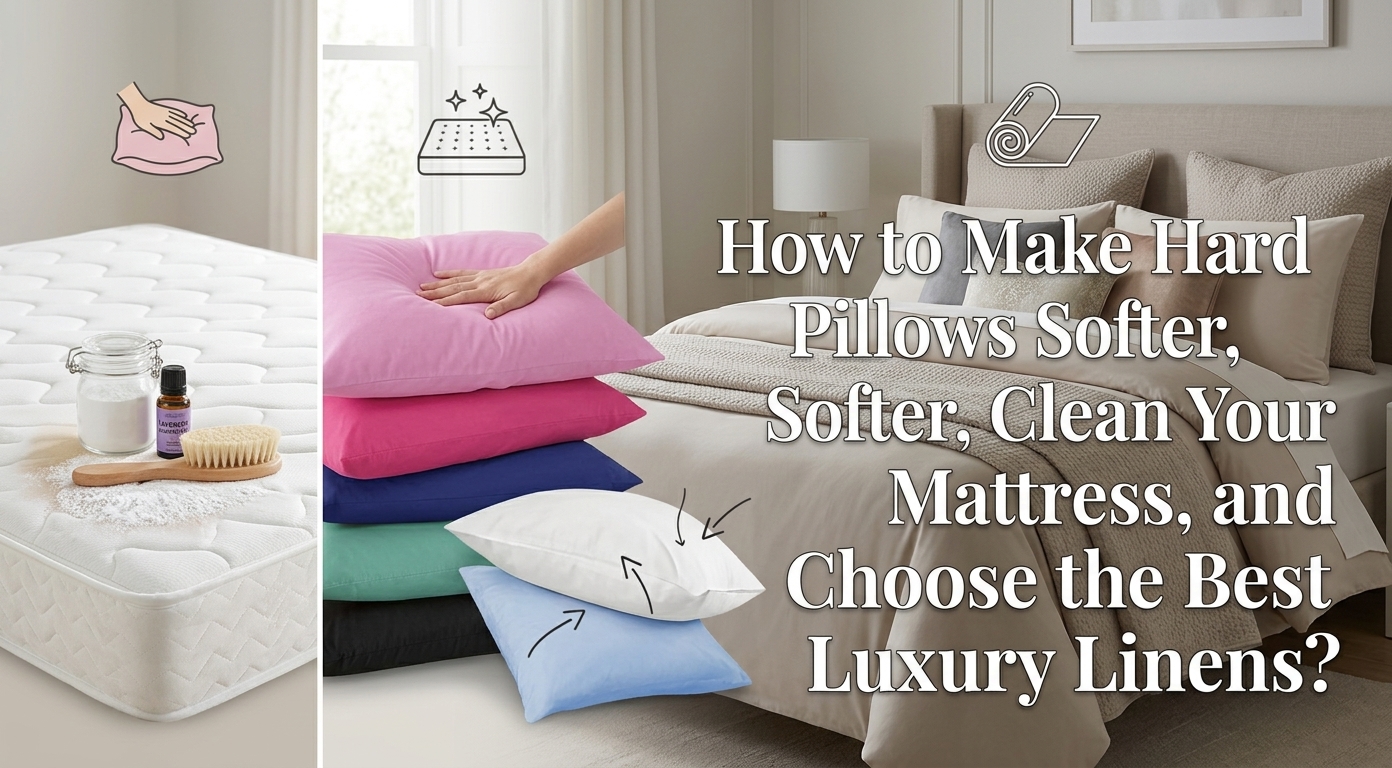
How to Make Hard Pillows Softer, Clean Your Mattress, and Choose the Best Luxury Linens
Oct 19, 2026
A comfortable bedroom should help you relax after a long day. However, a hard pillow, an unclean mattress, or rough bedding can ruin that experience. Poor sleep comfort often results from small details people overlook. Fortunately, a few practical changes can make your bed feel cleaner, softer, and more inviting.
Learning how to make hard pillow softer, understanding bed bugs cleaning mattress methods, and choosing the best luxury linens can improve your sleeping environment. You do not always need to replace everything at once. Instead, identify the problem, choose the right solution, and upgrade your bedding where necessary.
Common Bedroom Problems That Affect Sleep Quality
Many people struggle with uncomfortable bedding without identifying the exact cause. A pillow might feel too firm, a mattress might collect dust, or bedsheets might feel rough.
These issues can affect your nightly comfort. However, each problem requires a different approach.
1. Hard Pillows That Cause Discomfort
A pillow that feels too firm may create pressure around your head and neck. Dense filling, unsuitable pillow height, or an incompatible sleeping position often causes this discomfort.
Side sleepers generally need more height to fill the space between their shoulders and heads. Back sleepers often prefer moderate support, while stomach sleepers usually benefit from lower pillows.
Understanding how to make hard pillow softer starts with identifying the filling and your preferred sleeping position.
2. Mattress Hygiene and Bed Bug Concerns
Mattresses collect dead skin cells, sweat, dust, and other debris over time. Bed bugs present a separate concern because these pests hide in mattress seams, bed frames, and nearby furniture.
Simply cleaning a mattress does not guarantee that bed bugs will disappear. Proper inspection and targeted treatment become important when you suspect an infestation.
3. Rough or Uncomfortable Bed Linens
Even a supportive mattress and comfortable pillow can feel disappointing with scratchy sheets. Some fabrics feel stiff because of their construction, finishing treatments, or washing methods.
Choosing the best luxury linens can improve your bed's overall feel. Quality bedding can also help create a more relaxing bedroom environment.
How to Make Hard Pillow Softer
- Before purchasing a replacement, try a few simple adjustments. The right method depends on your pillow's material and construction.
- Check the pillow filling first. Memory foam, latex, polyester, feather, and down pillows require different care methods. Always check the manufacturer's instructions before washing, drying, or manipulating the filling.
- Allow the pillow to recover. If storage has compressed your pillow, gently fluff it and leave it somewhere well-ventilated. Some fillings regain their shape after resting.
- Redistribute the filling. For suitable feather or fiber-filled pillows, gently knead and shake the pillow to loosen compressed areas. Avoid this method with solid foam pillows, which excessive bending may damage.
- Use a softer pillow protector or pillowcase. A smooth cotton cover or another suitable fabric can improve the surface feel. However, it will not change the firmness of the internal filling.
- Consider replacing unsuitable pillows. If your pillow remains uncomfortable, develops permanent lumps, or no longer provides adequate support, replacement may work better than repeated adjustments.
- When learning how to make hard pillow softer, remember that softness should not compromise neck support. A pillow that feels comfortable in your hand might still be unsuitable for your sleeping position.
For shoppers exploring better bedding options, Yorkshire Bedding UK offers a starting point for considering pillows and other bedroom essentials. Compare different comfort preferences before choosing suitable products.
Bed Bugs Cleaning Mattress: Practical Steps for a Cleaner Bed
Maintaining mattress hygiene is essential, but bed bug treatment requires particular care.
Start by inspecting the mattress seams, piping, labels, and nearby bed frame. Look for live insects, shed skins, tiny pale eggs, or dark spotting. Bites alone cannot confirm an infestation because other insects and skin conditions can cause similar symptoms.
If you suspect bed bugs, follow these steps:
- Strip the bedding carefully. Place sheets, pillowcases, and washable fabrics directly into sealed bags before moving them around your home.
- Wash and dry suitable fabrics. Follow care labels and use a hot dryer setting when the fabric permits. Sustained heat can kill bed bugs when the required temperature reaches all affected items.
- Vacuum mattress seams. Use a suitable vacuum attachment around seams and crevices. Empty the vacuum contents into a sealed bag and dispose of them safely.
- Inspect the bed frame. Check joints, headboards, cracks, and nearby furniture for signs of activity.
- Use professional treatment when necessary. Contact a qualified pest-control professional if you find evidence of an infestation.
Avoid soaking a mattress with water or household cleaning products. Excess moisture can encourage mold, while unsuitable chemicals may create additional risks. Never apply pesticides to sleeping surfaces unless the product label specifically permits that use.
Effective bed bugs cleaning mattress routines also include regular laundering, mattress inspections, and reduced clutter around the bed. Nevertheless, routine cleaning alone will not eliminate an established infestation.
How to Choose the Best Luxury Linens
Once you have cared for your pillow and mattress, consider improving the bedding that touches your skin every night.
The best luxury linens combine comfortable materials, suitable construction, and practical maintenance requirements. Price alone does not guarantee quality, so examine the features that matter to your household.
Focus on Fabric Quality
Cotton remains a popular choice because it offers breathability and several weave options. Percale usually feels crisp and cool, while sateen often provides a smoother surface and subtle sheen.
Linen offers a relaxed texture and airflow, making it appealing to people who prefer a less polished finish. Your ideal fabric depends on personal preference, climate, and how warm you feel during sleep.
Understand Thread Count
Thread count measures the number of threads woven into a square inch of fabric. However, this measurement does not independently determine softness, durability, or overall quality.
Fiber quality, weave, finishing, and manufacturing standards also influence how sheets feel and perform. Compare these factors instead of choosing bedding based solely on the highest advertised number.
Check Fit and Maintenance
Measure your mattress before ordering fitted sheets. Deep mattresses and mattress toppers may require deeper pockets to prevent sheets from slipping off overnight.
Also, review washing instructions before purchasing. Bedding that requires complicated maintenance might not suit a busy household. The best luxury linens should balance comfort with realistic everyday care.
Yorkshire Bedding UK is worth exploring when comparing bedding options. Consider which materials, finishes, and comfort features best suit your bedroom.
Why Upgrading Your Bedding Can Make a Difference
A thoughtful bedding upgrade can improve several parts of your nightly routine. A suitably supportive pillow can feel more comfortable, while breathable sheets may help manage warmth and moisture.
Meanwhile, clean bedding and regular mattress inspections support a more hygienic sleep environment. Combining these habits with suitable fabrics can make your bed feel more inviting without requiring a complete bedroom makeover.
Rather than buying everything immediately, identify your biggest source of discomfort first. Replace an unsuitable pillow, address a pest problem properly, or invest in better sheets when your current ones feel rough or worn.
Yorkshire Bedding UK can be part of your research as you compare available bedding products. Pay attention to specifications, care requirements, and whether each item matches your needs.
Conclusion
Creating a comfortable bedroom starts with understanding what makes your current bedding uncomfortable. Learning how to make hard pillow softer can improve comfort without unnecessary spending. Proper mattress inspections and targeted bed bug treatments address hygiene concerns, while the best luxury linens can improve your bed's everyday feel.
Start with one practical change and build from there. Compare materials, check product care instructions, and choose bedding that supports your preferred sleeping position. With thoughtful decisions and consistent maintenance, you can create a cleaner, softer, and more comfortable space for better rest.